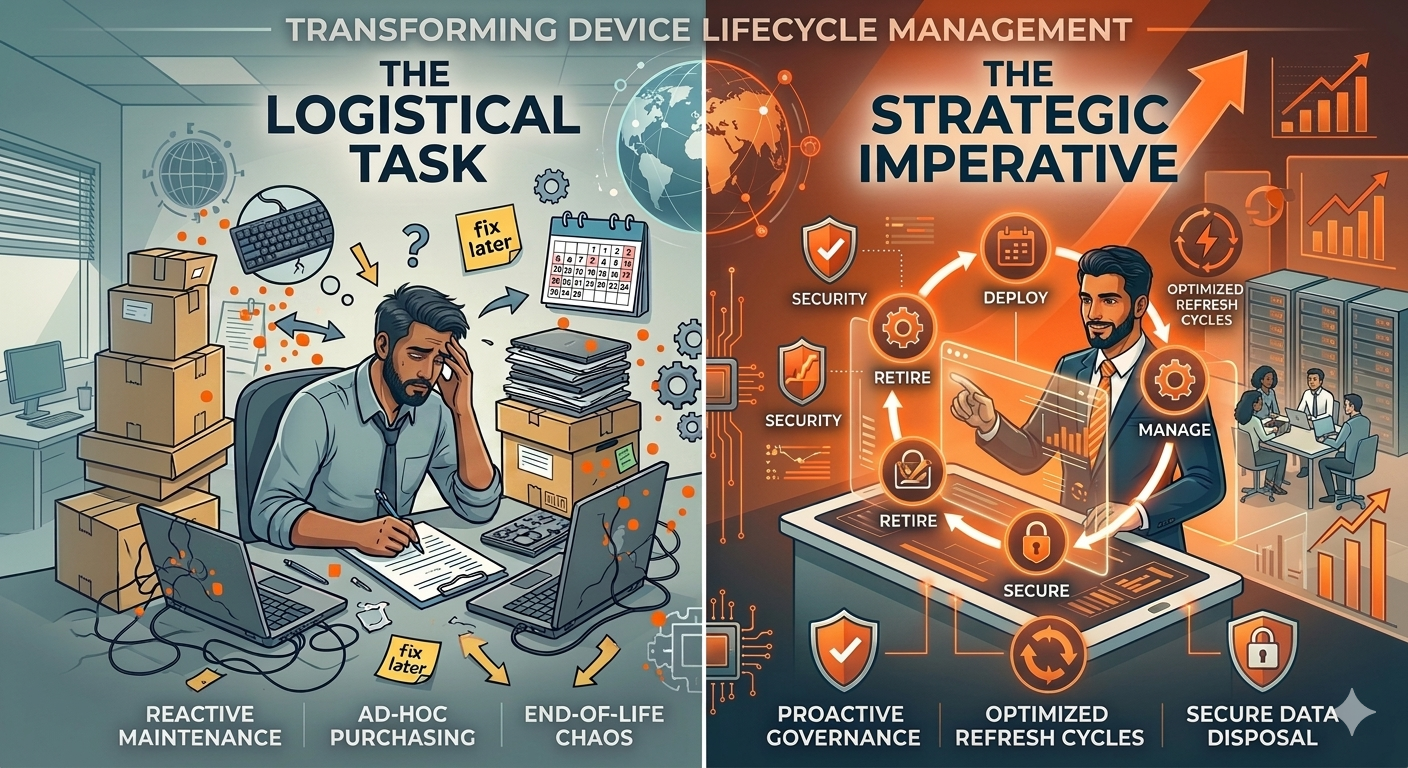
When evaluating endpoint logistics services, most IT and procurement teams focus on the obvious:Did the device arrive?
Was it on time?
But the real cost of endpoint logistics isn’t in delivery—it’s in everything around it.
Even a “working” process can create hidden inefficiencies:
These issues don’t always show up in a budget line item, but they impact productivity, security, and employee experience.
Endpoint logistics complexity scales quickly.
Without standardized systems, small inefficiencies multiply.
Leading IT organizations treat endpoint logistics as part of their infrastructure, not a one-off task.
They prioritize:
The real question isn’t:
“Did the device arrive?”
It’s:
“How much time, risk, and operational overhead did it take to get there?”
Optimizing endpoint logistics services is aobut more than delivery. It’s about building a system that scales.




.png)